
Key takeaways
- A Disabled Facilities Grant (DFG) is paid by the local council to adapt the home of a disabled adult or child.
- The mandatory grant in England goes up to £30,000. Councils can add discretionary help on top.
- Most applications start with an occupational therapist assessment, not with a builder.
For many families, an adaptation is the difference between staying at home and moving into care. A level access shower, a ramp or a downstairs bedroom can give someone their independence back. In England, the main way these works are paid for is the Disabled Facilities Grant, usually shortened to DFG. This guide explains how it works, in plain English.
What is a Disabled Facilities Grant?
A DFG is a grant from your local council to help pay for changes to a home so a disabled person can live there safely and independently. It is a legal entitlement under the Housing Grants, Construction and Regeneration Act 1996, which means a council must pay it when the conditions are met.
- Owners, private tenants and housing association tenants can apply. Landlords can apply on behalf of a disabled tenant.
- The disabled person must intend to live in the property for the grant period, usually five years.
- Council tenants are normally helped through the council's own housing budget rather than a DFG.
What can a DFG pay for?
The grant covers work that makes it easier to get in and out of the home and to use its essential facilities. Typical examples include:
| Need | Typical adaptation |
|---|---|
| Getting in and out | Ramps, steps, half-steps, wider doors, level thresholds |
| Washing | Level access shower, wet room, shower over bath |
| Moving around | Stairlift, through floor lift, widened hallways |
| Cooking | Adapted kitchen with lower worktops and accessible storage |
| Space | Downstairs bedroom or bathroom, ground floor extension, garage conversion |
| Safety and control | Grab rails, heating and lighting controls within reach |
How much is the grant?
In England the mandatory DFG goes up to £30,000. Many councils also have a housing assistance policy that lets them add discretionary funding on top, for example for larger extensions or to cover costs above the limit. Wales and Northern Ireland have their own limits and rules.
The means test
For adults, the council looks at the income and savings of the disabled person and their partner to work out whether they should contribute. People on certain benefits, such as Universal Credit or Pension Credit, are usually passported through without a contribution. There is no means test for a disabled child or young person under 19.
From first call to finished work
- 01Contact your council's adult or children's social care team and ask for an occupational therapist (OT) assessment.
- 02The OT recommends the adaptations that are necessary and appropriate for the person.
- 03The council's housing or grants team checks the work is reasonable and practicable for the property, and runs the means test.
- 04A contractor surveys the home, draws up the design and prices the work. Many councils use contractors from an approved framework.
- 05The grant is approved. By law the council must decide within six months of a full application.
- 06The work is carried out, inspected and signed off, then the contractor is paid.
Where UPS fits in
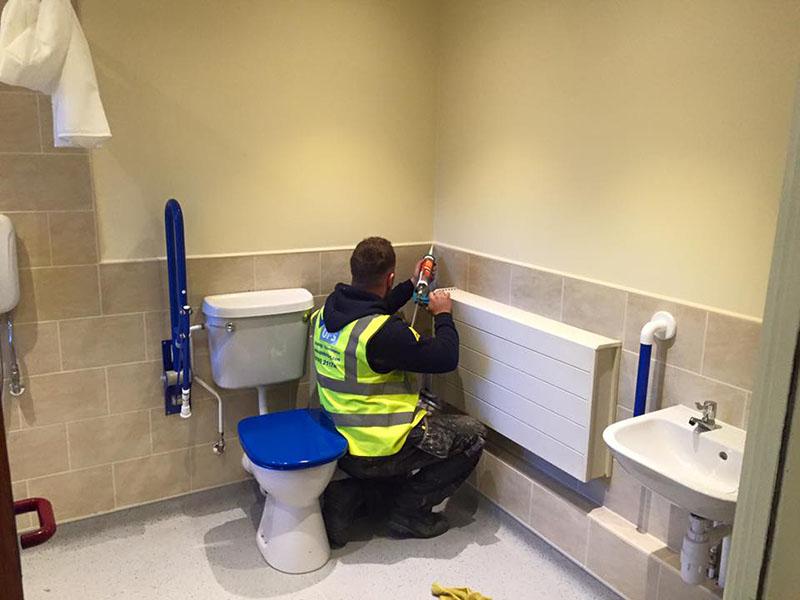
UPS works on DFG and adaptations programmes for councils and housing associations across the North West, including major adaptations for Trafford Council and Cheshire East Council and adaptations for Manchester's Service for Independent Living. If you think you need an adaptation, start with your council or landlord. If UPS is already booked to work in your home and you have a question, call us on 01942 211 746.
Related service
Disabled Adaptations
Minor and major adaptations, from grab rails and ramps to wet rooms, adapted kitchens and extensions.